Ranthambore Wildlife Safari Guide: Vehicles & Spotting
Embarking into the rugged terrain of the Aravalli and Vindhya ranges offers one of the most exhilarating wildlife adventures on the Indian subcontinent. Navigating this protected reserve successfully demands sound preparation, an understanding of the terrain, and strategic planning regarding safari vehicles, booking cycles, and field observations. Selecting a trusted
Choosing the Right Safari Vehicle: Gypsy vs. Canter
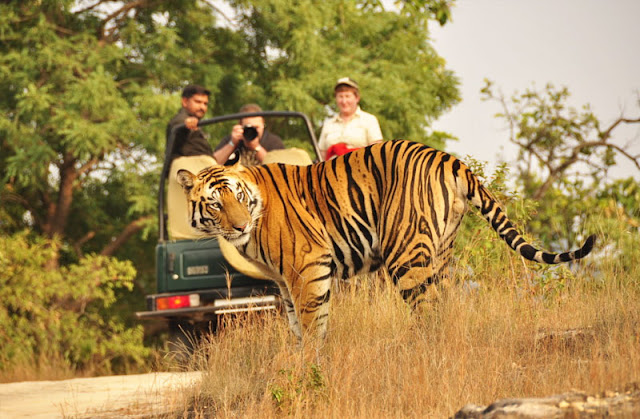
The Forest Department permits two official categories of motorized vehicles inside the national park: the 6-seater open-top 4x4 Maruti Suzuki Gypsy and the 20-seater open-air Canter. Both vehicle types operate under strict environmental and routing regulations, but each provides distinct advantages depending on group size, photography goals, and personal preferences.
The 6-seater Gypsy offers unmatched maneuverability along narrow, rocky trail segments. It produces lower engine disturbance and allows travelers to change vantage points rapidly when animals move through dense dry-deciduous forest. Photographers typically favor the Gypsy because its lower seating position provides stable angles for telephoto lenses. The smaller seating capacity also ensures unanimous decisions between travelers and their assigned naturalist regarding how long to wait at specific locations, such as watering holes or rocky clearings.
The 20-seater Canter operates as a dependable, budget-conscious choice well suited for larger travel groups, student excursions, and families. Because a Canter sits significantly higher off the forest floor, passengers enjoy an elevated panoramic view over tall grasslands and roadside shrubs. This heightened elevation often makes it easier to track distant movement across the park's scenic water bodies.
Field Spotting Strategies and Forest Alarm Calls
Locating apex predators in their natural habitat relies on seasoned tracking skills, patience, and sensory awareness rather than pure chance. Experienced forest drivers and certified naturalists rely heavily on inter-species alarm calls rather than random searching.
Prey species maintain a cooperative vocal warning system across the park. The sharp bark of a chital (spotted deer), the resonant bell-like call of a sambar deer, and the guttural, rhythmic cough of a northern plains grey langur stationed high in a dhok tree signal an active predator on the move. Tracking pugmarks on loose sand tracks during the early morning hours reveals recent territorial patrols, while claw marks on tree trunks delineate boundaries. Paying attention to sudden silence among bird flocks often signals an approaching carnivore long before it steps into view.
Zone Distribution and Seasonal Dynamics
The reserve is divided into 10 designated safari zones to regulate traffic flow and protect wildlife habitats. Zones 1 through 5 represent the core historical areas containing water reservoirs such as Padam Talao, Rajbagh, and Malik Talao, framed by the ancient Ranthambore Fort. Zones 6 through 10 comprise buffer and extended forest tracts that feature rugged ravines, plateau landscapes, and tranquil grasslands.
Wildlife movement shifts significantly across seasons. From October to February, cooler mornings encourage animals to bask on sunlit rock outcrops and along dirt tracks. From March to June, rising temperatures cause deciduous foliage to thin out, drawing tigers, leopards, sloth bears, and striped hyenas toward perennial water channels, lakes, and shaded streams. Booking an authentic

Essential Practical Advice for Safari Travelers
To ensure an ethical, safe, and productive journey inside the park, visitors must adhere to strict guidelines outlined by wildlife authorities:
Carry the exact original government identification document used during the advance safari booking process, as forest gate check-posts verify credentials before granting entry.
Wear muted earth tones such as khaki, olive green, beige, or dull brown to blend into the forest foliage, avoiding bright neon fabrics and strong synthetic perfumes.
Pack dust-proof gear covers for sensitive optics and camera equipment, particularly during dry summer safari months.
Remain seated inside the vehicle at all times and maintain low conversational volume to prevent disturbing wildlife.
Avoid littering and strictly refrain from carrying single-use plastics into the forest reserve.
Organizing Your Itinerary and Transit
Coordinating safari permits, vehicle allocations, and regional transport requires systematic scheduling. Travelers arriving from the national capital region frequently arrange a comprehensive


Comments
Post a Comment